README du dépôt
🎬 git-cinema
Turn any git history into a film.
One command reads your repository and writes a single HTML file: directories grow into a living tree, files light up when they're added, changed or deleted, and every contributor flies around the codebase firing at the files they touch. Hit Record and you get a 1080p MP4 to post.
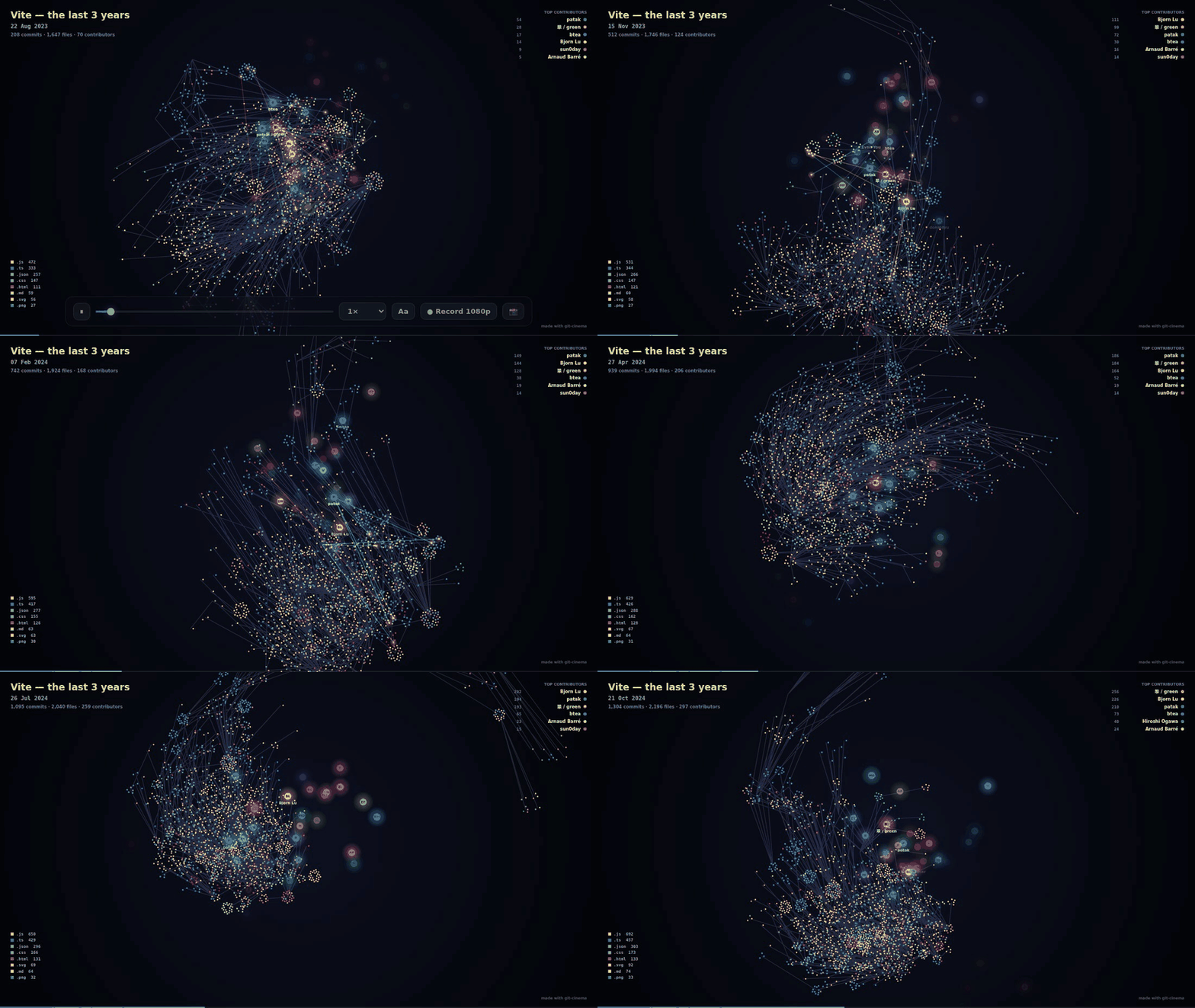
▶ Watch it live: Express, 17 years · Vite, last 3 years
Quick start
git clone https://github.com/CedricPoint/git-cinema.git
node git-cinema/git-cinema.js path/to/your/repo --open
Requires Node.js 18+ and git. Zero dependencies, nothing to install.
  🎬 express: 5,637 commits, 383 contributors, 903 files, 2009→2026
  → express-cinema.html (0.2 MB, 184 ms)
Or put it on your PATH with cd git-cinema && npm link, then run git-cinema in any repository.
What you see
| 🌳 The tree | Every directory is a node, every file a dot colored by language, arranged around its folder. The layout is a live physics simulation, so the project visibly grows, splits and gets reorganised. |
| ✨ The pulses | Green flash for a new file, amber for a change, red for a deletion (the file then fades away). |
| ☄️ The contributors | Each author is a glowing comet that flies to the files of each commit and fires beams at them. |
| 📊 The HUD | Date, commit count, live files, top contributors and language breakdown, all drawn into the video. |
The player
| Key | |
|---|---|
space | play / pause |
← → | seek |
+ − | speed (0.25× to 8×) |
L | toggle labels |
S | save a PNG snapshot |
| ● Record 1080p | replays the film from the start and downloads it as MP4 (H.264) where the browser supports it, WebM otherwise |
By default the whole history plays in about 80 seconds, and long quiet periods are skipped.
Options
git-cinema [repo] [options]

  -o, --out <file>      Output HTML file (default: <repo>-cinema.html)
  --since <when>        Only commits after this date, e.g. "2 years ago"
  --until <when>        Only commits before this date
  --max-commits <n>     Keep the most recent n commits (default: 30000)
  --title <text>        Title shown in the film (default: repository name)
  --exclude <glob>      Hide paths (repeatable), e.g. --exclude "docs/**"
  --anonymize           Replace author names with "Dev 1", "Dev 2", …
  --include-bots        Keep commits from bots (dependabot, renovate, …)
  --open                Open the film in your browser when done
Good to know
- Private code stays private. The HTML contains file paths, author names and commit dates. Never file contents, emails or commit messages. Use
--anonymizeto drop names too, and--excludeto hide paths. - One person, several emails? Authors are merged by name and by email, and
.mailmapis respected. - Bots are skipped by default, so Renovate doesn't steal the show.
- Renames play as the file leaving one folder and appearing in another.
- Shallow clones start with a big bang: everything that existed at the shallow boundary appears in the first frame.
node_modules,vendor,dist,buildand similar folders are hidden.
How it works
git log --reverse --name-status -Mis parsed into a compact timeline: a table of paths, a table of authors, and each commit stored as[time, author, [path × 4 + kind]]. Express's 17 years fit in 200 KB.- That timeline is embedded in
player.html, a canvas renderer with a spring/repulsion layout (spatial hashing keeps it fast with thousands of directories), pre-rendered glow sprites and a percentile-based camera. - Recording uses
canvas.captureStream()andMediaRecorderat a fixed 1920×1080, so the video doesn't depend on your window size.
Credits
Inspired by the legendary Gource. git-cinema is an independent take that needs no install and runs in any browser.
License
MIT